Hey, I'm Neel. Here you'll find stories and reflections of my time in Denmark, among newer posts about a range of topics. Maybe it'll be fun, maybe ridiculous. Read on and see which one.
A Note on Language Learning and Culture
Wednesday, July 29, 2015
BY Unknown
0 COMMENTS
0 COMMENTS

Only nine days till lift off. I'll be staying in Taastrup, which is in the capital region of Denmark. It's a town with a population of about 33,000 people. Just from checking it out on Google Earth, it looks tranquil, with tidy streets and groups of buildings separated by vast, flat fields. In my neighborhood there are mostly white houses, dusty orange tile or thick dark thatch making up their roofs. There's a church almost a millennium old down the street. The area is imbued with the elegant and timeworn atmosphere you'd imagine in Europe. Taastrup is very close to Denmark's capital city, Copenhagen. Go by bike or train and you'll be surrounded by the urban bustle of the Danish people. It's going to be awesome to explore as much as possible.
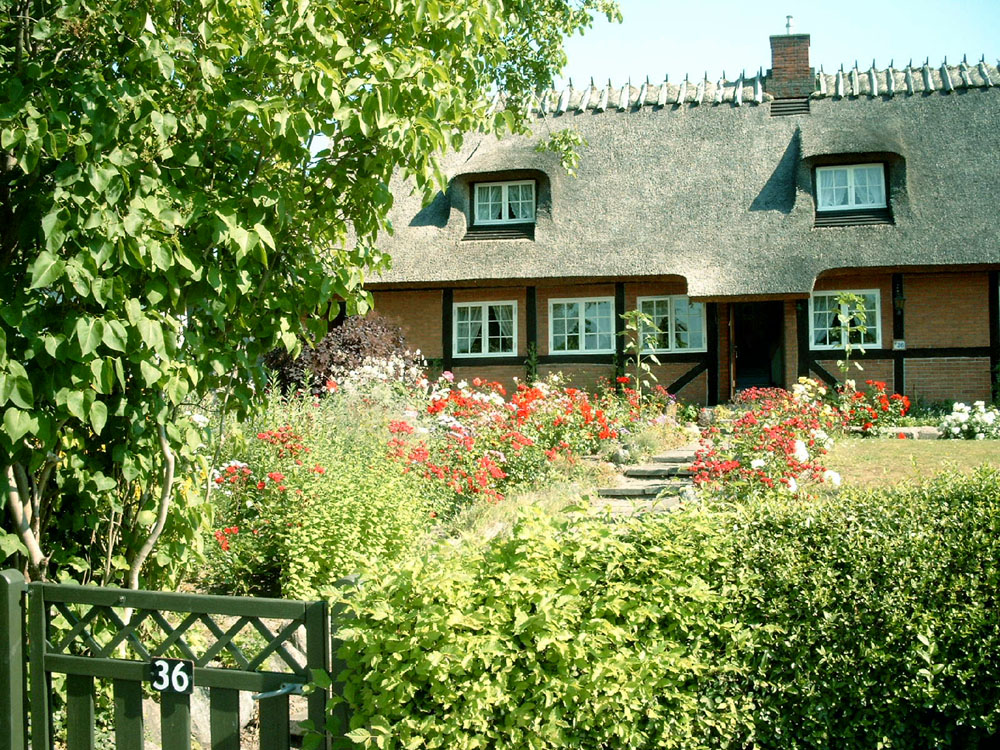 |
| An example of a house in Taastrup |
I've gotten advice in the past year about integrating into the
native lifestyle, which means absorbing the language, food habits, social
conventions, and more. It's essentially going with the Danish flow. You still
maintain who you are as a person, while inhabiting another culture's way of
life. That's totally fine, but I believe that there's a crucial aspect of
becoming comfortable with foreign cultures that's often ignored. All cultures
originate from the same source: humanity.
Regardless of where you live, there are amazing and detestable
things around you, directly and indirectly influencing you. You may be in a
country that has abundant natural resources and spectacular landscapes, but a
dictator is brutally oppressing everyone. You'll find examples of this in South America during the 70's and 80's. You may be on vacation in another
country where you're extravagantly living at a low cost, though most of the poorer locals subsist in a society that doesn't care about them. This can be seen in various parts of India and Bangladesh. Getting more personal, during your childhood your parents could have
purchased whatever you wanted, but they were always busy and you were neglected, fueling emotional issues that you now struggle with. In the places I've stayed within the United States, I've known some people, friends even, who had to deal with this. None of these issues is clear cut. If you look carefully, the apparent heroes and culprits drift in a sea of grey morality.
Every person's life is a story with its own setting, languages, and
characters. Each one has its uniqueness along with a common quality that links
them all, that good ol' humanity. There's a reason why a person from Russia can learn Mandarin and someone from Peru can pick up Hindi if they're willing to put in the work. We can also acclimate to different customs and mindsets. We're
adaptable mofos.
My family's frequent moving when I was younger exposed us to
places with drastically different cultural backgrounds, from ratty tenement
buildings to government supported housing to a charming home in an affluent
suburb, what appeared to be so disparate in the beginning turned out to be endless iterations of that good ol' humanity. The guy on the street
with baggy jeans and the neighbor who argued with his wife every night and the
old couple who kept to themselves condensed into the bare essence of what it was
to be you and me. They were the same. The environment determined the languages they
spoke, the religion they practiced, the values they held...but in the end, they
felt in the same way and wanted the same things. How they acquired those needs and desires was where the dissimilarities
showed up. That's where culture, especially through family and peers, takes
control to form part of our initial emotional makeups and behavior.
How is this related to digging into a foreign country and getting
to know the people? For me, learning another language and understanding how
stuff works somewhere else becomes simpler (not that learning Danish is a
breeze…) when you're aware of that innate connection. The common political view
and the fashion matter plenty, but they're shallow compared to that good ol'
humanity (OK, no more saying that).
The funny sounds you hear in some language are sputtered out at
first with some hesitance, later with more confidence and skill, as you
continue. You become kinder to others, even if you don't understand their words
or crazy hand gestures. You're more motivated to connect with people and are
willing to embrace the frustration of being in an alien land. And after moving past those stages, you get to party party, aw yeah.
Top Picture Credit: Michael Dreves Beier

The Thoughts of Someone Going Abroad
BY Unknown
0 COMMENTS
0 COMMENTS

It's the go-to question for people when they learn about my upcoming exchange. I usually reply with a "Yeah." or "At the moment I'm just dealing with some bureaucracy stuff, so later." or "I'm trying to spend time with my friends and be here now." These answers are automatic. I drilled them into my head to avoid being locked into repetitive conversations. When I'm feeling exceptionally fatigued, I quickly change the topic.
Why? Nobody's doing anything wrong. It's natural to want to inquire about a person's future, especially if it's a major shift like moving to another continent. And since we're all pretty much the same, the questions will surely have similarities.
Enter the perfect cliche: It's not them. It's me. Yes, it's a platitudinous saying that...actually, no, fuck you. It's valid in this context.
The day that I was informed of my acceptance to Rotary Youth Exchange, my reaction was enthusiastic. It was incredible to have dedicated so much energy toward a goal and to have succeeded. Wowzers, an opportunity to advance international relations, to be culturally enriched, and to throw myself into a foreign unknown. It was the perfect first step to where I wanted to go with my life at the moment. I was even tap dancing with glee.
But it wasn't the only chance to do what I wanted. Nothing is for anyone.
Imagine if I were rejected. I would have received a call from a Rotary representative, swapping pleasantries but eventually discussing the fact that I wasn't going. "Oh." The next few seconds of suppressive silence would've told anyone near me what happened. It would have hurt. It would have been temporarily defeating. I'd be feeling despondent for several days. And then, I'd move on. Maybe college. Maybe volunteering in Russia or Nicaragua. Maybe working in Canada for a year. These options can be just as fulfilling as being an exchange student. It may be more difficult, but if I truly cared, I'd make it. Anyone could.
Happiness is a malleable concept for humans. It's part of our psychological immune system. Whatever place we find ourselves in, we'll find or create something positive about it.
Viktor Frankl, a former Austrian psychiatrist, recounted the atrocities he witnessed in the concentration camps of World War 2 in his one of his books. He emphasized the delight he felt at being given a five minute break after laboring for hours in freezing weather. An extra piece of stale bread was a blessing and staying out of a workgroup with a brutal leader meant you'd live another day. Surviving, even in hell, became the ultimate purpose and joy, for what tiny good it did, to many of those poor folk.
Now, don't throw yourself into a concentration camp. You'll die cold, starving, and abused. The weakness of our flexible capacity to be happy is that we need food, shelter, social interaction, and freedom to maintain a sufficient baseline of happiness. Without one or more of them, even a trace of contentness could be crushed when we're reminded of what's absent.
So when the question of how excited how I am is posed, I remember a very summarized version of that not only to be a smartass but to keep in mind that it would have been okay to not go. But why do I have instinctive answers or jump into different subjects? Well, when you're relentlessly chattering about the same thing, though it's no one's fault, being an automated human for a bit can be nice, or at least discussing something else can enliven the conversation. It can be related to exchange if my actual excitement isn't drained.
Here's an example:
I didn't do it alone. My parents' support was priceless. They were the ones who drove me to the doctor's office six times to settle the required medical clearance papers. They were the ones who had to deal with their anxieties about me going away, which took a lot of self-control and empathy. Even though the program was relatively inexpensive for them, investing more than $5,000 in what I wanted demonstrated a gargantuan load of trust in me and a respect for my desires. We have an abundance of dysfunctional family issues, but that's okay. The positive effect they've had on me outweighs the emotional baggage, which is my responsibility to manage now.
My best friends-turned-brothers, Sam and Brett, have been encouraging throughout the whole process, despite us going our own directions. None of us can predict if we'll still be close in the next several years. So what? I'll always be grateful for those cheeky bastards, who brought me into their family, expressed sincere love, and pissed me off again and again. I love you both.
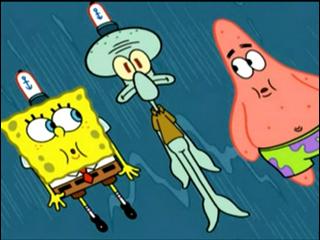 |
| The three of us had some crazy adventures. Hope to keep having more |
The skeptics were helpful too. Without someone challenging you, you'll turn lazy and inhibited. The vast majority for me weren't malicious. Some were simply concerned. They couldn't fathom my reasoning for shooting off somewhere without enrolling in college first, or primarily seeking work experience to gain an advantage in the international job market. Sometimes the strongest doubt can come from you. Self-fulfilling prophesying or excessively abiding by the status quo will hinder you. You will die. I will. Your dog will. The stupid buzzing fly will, with a swatter in a minute or two actually. Do what makes you tingle on the inside, and accept the down days that will come with it.
And the three families I'll be staying with? They deserve kudos for hosting a student at their own expense. Perhaps I'll write about them later, after getting to know them.
My high school is called Høje-Taastrup Gymnasium. Pronounce it. I dare you. Maybe a post will be done on that, comparing American high school to its Danish counterpart, or even a larger piece on how their respective educational systems function and treat students, teachers, and parents.
How about covering the widely accepted beliefs, health, fashion, attitude toward sex/dating, environmental protection or lack thereof, and other stuff? Then considering American, Bengali, and Canadian culture to see how life works in each society?
Oooh, maybe something on various art movements in Danish history and popular mathematical philosophies and if they like/have Twinkies...and let's end it here.
Top Picture Credit: Fabian Schmidt
What You Should Know About Denmark
Tuesday, July 28, 2015
BY Unknown
0 COMMENTS
0 COMMENTS

Hej alle sammen; that means "hi everyone" in Danish. This blog will be written in Danish from now on to submerge ourselves in the culture. Get ready.
Just kidding, but here's some interesting info on my host country, which anyone could have found, but that requires an appreciable effort. And why go so far when I'm here? Enjoy.
Denmark is part of a region called Scandinavia. Sweden and Norway make up the rest. The three countries constitute a lot of northern Europe, with Denmark being the southernmost portion. Finland and Iceland have been claimed to be Scandinavian as well, though I prefer the differences between the Scandinavian and Nordic countries. Danish, Swedish, and Norwegian are related languages that are mutually intelligible. However, Danish has a running joke of being the funniest sounding and most difficult to comprehend out of the three. There'll be links to two skits about it at the end.
Denmark is within the Kingdom of Denmark. The kingdom also contains Greenland and the Faroe Islands. Greenland has its own language, Greenlandic, along with Danish and English. Natives of the Faroe Islands speak Faroese and/or Danish and English. I've chatted with someone from the islands and she talked about how she'd struggle in Denmark when going to university there because of the significant cultural differences, which was surprising to hear.
About two years ago, I had only heard stories about the Vikings of Scandinavia invading and pillaging other lands more than a thousand years ago, amassing a sizeable wealth and garnering infamy throughout much of Western Europe. Most people have the same rough idea about them and don't know much else about Denmark, Sweden, or Norway. Then I watched a historically inaccurate show called Vikings. The series was 80% fiction and 20% even more fiction, but it made me curious about how the polytheistic way of life in Scandinavia fared when Christianity became the dominant religion in Europe. Plus it was refreshing to learn about a European civilization that starkly contrasted what we studied in school (British and French histories). That eventually drove me to research the first traces of humanity in Scandinavia to what was there now.
Before the Viking Age, Danish history is scarce. Scandinavian history is too. There aren't substantial historical records until the Vikings began their conquests, and even then the sources, groups who traded with or were attacked by the Vikings, could only detail the interactions they had with them. The information can be vague or assumptious at times, looking at various sources, so don't take it too seriously. And to avoid writing anything that will make you bash your head on the keyboard for a nice little nap, the interesting stuff will receive more attention.
The ancestors of the Danes, Swedes, and Norwegians started as hunter-gatherers in small tribes, running around to get shit done. After the end of the last glacial period (~13,000 years ago), the ice that blanketed almost all of Scandinavia slowly receded, and humans pushed up north. Over the next few thousand years, the climate warmed, allowing more animals and plants to inhabit the area and also causing the sea levels to rise, which made fish a valuable commodity. Civilizations emerged and disappeared as millennia passed. Agriculture superseded the constant moving and hunting at approximately 3,000 BCE. Social classes and inequality were beginning to take their hold.
OK, screw the chronology. Let's just discuss what's really fascinating. It turns out that the Romans traded with the yet-to-be Danes, Roman coins having been discovered in their lands. Remnants of Celtic influence have also been documented in the current names of a few settlements. There's not much else to say. Onward to the Viking Age (late 8th to late 11th centuries).
The Vikings, or Norsemen, have been demonized throughout most of history as uncouth heathens. Their name's origins have been debated, but let's not get into that. They were Scandinavians who left their homes and invaded other countries, seeking treasures, lands, and slaves. That they weren't Christians differentiated them from other Europeans. Only in the past two centuries have they been given notable regard by historians. There have been descriptions of Finnish and Baltic Vikings as well in certain
records.
They didn't wear horned helmets, bathed regularly, and weren't unified, as the Scandinavian tribes preferred the "stab, stab, kill" method when there were problems among themselves. Old Norse was the common language, and runes were used to write before the introduction of Latin script (the letters in English, French, Spanish, etc.). Women were given the right to own property and divorce, though they were still expected to tend the house and family while the men were away. Slaves were a staple in all the tribes, either selling them to foreign markets or bringing them home after an incursion.
Cool fact: Bluetooth, a type of wireless communication, was named after Harald Bluetooth, a 10th century Danish king...he'd be proud.
The first raids happened in England during the very late 700s. Eventually they spread to modern day France, Germany, Ireland, Scotland, Spain, Portugal, Russia, and more. The Norsemen had contact with traders from the Byzantine Empire all the way to Baghdad; a few travelled and offered their goods and services. They may have even met people from Sub-Saharan Africa. As the invasions progressed, the idea of settling became popular. Much of Scotland, England, and a northern region of France, Normandy, became homes for the invaders.
In the 10th century our buddy Harald established the Kingdom of Denmark (one of the oldest monarchies in history) and converted to Christianity. This is when they got all medieval, decapitating people while venerating the nobility and church. Big daddy Denmark later launched into conflicts with Sweden over who would control this sea or that sea, and it continued for the next few hundred years. In 1397, Denmark and Sweden finally got over it (though many more wars would later transpire) and formed the Kalmar Union, which also included Norway, because who doesn't like a Scandinavian threesome? *cough* Queen Margaret I of Denmark ruled over the union, and she was a guile woman who was close to having a stable empire with her country at the center.
Shit happened, and she died. Sweden divorced Denmark and Norway in 1523, and Norway abandoned the union in 1814, probably got bored with the relationship. Norway succeeded in gaining independence in 1905, after shacking up with Sweden for several decades. Luckily for Denny, during its time with Norway and after, it succeeded in controlling multiple colonies worldwide, which was the the cool thing to do in those days. Greenland and the Faroe Islands are what's left of that age. The Constitutional Act of Denmark in 1849 gave citizens their basic rights and duties, having some amendments added later.
A note on women: Women in Denmark were given the right to vote in 1915
Denmark was neutral during World War 1. Unfortunately when World War 2 was occurring, Nazi Germany occupied its northern pal in 1940. Interestingly, 90-95% of Danish Jews were saved from death when preparations to move them into concentration camps were made known. Many Danes voluntarily assisted Jewish people in fleeing to Sweden and sent supplies to those captured and sent to a camp in current day Czech Republic. Fortunately nothing in Denmark was destroyed, unlike many other European countries, as the Nazis wanted peaceful cooperation.
Moving to the present, Denmark is a member of the United Nations, NATO, and the European Union. It has a widespread welfare system for its citizens, providing free healthcare and higher education in exchange for exorbitant taxes. It has a strict immigration policy and naturalization process with about 89% of the population consisting of Danes, the remainder being immigrants. The average Dane loves to drink and eat rye bread while confusing foreigners with his or her native tongue twisters. A lot of important stuff has gone unmentioned. Though that would involve more work, so forget it and let us simply enjoy our lives.
Sources (at least most of them):
Denmark's constitution Viking history Viking history (2) Denmark's history Viking stuff
Denmark's Jews WW2 Denmark's Jews WW2 (2) Queen Margaret I Harald Bluetooth
The silliness of the Danish language (Youtube): Video 1 Video 2
Title Photo Credit: Thomas D Mørkeberg
 |
Denmark is within the Kingdom of Denmark. The kingdom also contains Greenland and the Faroe Islands. Greenland has its own language, Greenlandic, along with Danish and English. Natives of the Faroe Islands speak Faroese and/or Danish and English. I've chatted with someone from the islands and she talked about how she'd struggle in Denmark when going to university there because of the significant cultural differences, which was surprising to hear.
About two years ago, I had only heard stories about the Vikings of Scandinavia invading and pillaging other lands more than a thousand years ago, amassing a sizeable wealth and garnering infamy throughout much of Western Europe. Most people have the same rough idea about them and don't know much else about Denmark, Sweden, or Norway. Then I watched a historically inaccurate show called Vikings. The series was 80% fiction and 20% even more fiction, but it made me curious about how the polytheistic way of life in Scandinavia fared when Christianity became the dominant religion in Europe. Plus it was refreshing to learn about a European civilization that starkly contrasted what we studied in school (British and French histories). That eventually drove me to research the first traces of humanity in Scandinavia to what was there now.
Before the Viking Age, Danish history is scarce. Scandinavian history is too. There aren't substantial historical records until the Vikings began their conquests, and even then the sources, groups who traded with or were attacked by the Vikings, could only detail the interactions they had with them. The information can be vague or assumptious at times, looking at various sources, so don't take it too seriously. And to avoid writing anything that will make you bash your head on the keyboard for a nice little nap, the interesting stuff will receive more attention.
The ancestors of the Danes, Swedes, and Norwegians started as hunter-gatherers in small tribes, running around to get shit done. After the end of the last glacial period (~13,000 years ago), the ice that blanketed almost all of Scandinavia slowly receded, and humans pushed up north. Over the next few thousand years, the climate warmed, allowing more animals and plants to inhabit the area and also causing the sea levels to rise, which made fish a valuable commodity. Civilizations emerged and disappeared as millennia passed. Agriculture superseded the constant moving and hunting at approximately 3,000 BCE. Social classes and inequality were beginning to take their hold.
OK, screw the chronology. Let's just discuss what's really fascinating. It turns out that the Romans traded with the yet-to-be Danes, Roman coins having been discovered in their lands. Remnants of Celtic influence have also been documented in the current names of a few settlements. There's not much else to say. Onward to the Viking Age (late 8th to late 11th centuries).
The Vikings, or Norsemen, have been demonized throughout most of history as uncouth heathens. Their name's origins have been debated, but let's not get into that. They were Scandinavians who left their homes and invaded other countries, seeking treasures, lands, and slaves. That they weren't Christians differentiated them from other Europeans. Only in the past two centuries have they been given notable regard by historians. There have been descriptions of Finnish and Baltic Vikings as well in certain
records.
 |
| Here are some ducks if you're bored. They're fucking cute. |
Cool fact: Bluetooth, a type of wireless communication, was named after Harald Bluetooth, a 10th century Danish king...he'd be proud.
The first raids happened in England during the very late 700s. Eventually they spread to modern day France, Germany, Ireland, Scotland, Spain, Portugal, Russia, and more. The Norsemen had contact with traders from the Byzantine Empire all the way to Baghdad; a few travelled and offered their goods and services. They may have even met people from Sub-Saharan Africa. As the invasions progressed, the idea of settling became popular. Much of Scotland, England, and a northern region of France, Normandy, became homes for the invaders.
In the 10th century our buddy Harald established the Kingdom of Denmark (one of the oldest monarchies in history) and converted to Christianity. This is when they got all medieval, decapitating people while venerating the nobility and church. Big daddy Denmark later launched into conflicts with Sweden over who would control this sea or that sea, and it continued for the next few hundred years. In 1397, Denmark and Sweden finally got over it (though many more wars would later transpire) and formed the Kalmar Union, which also included Norway, because who doesn't like a Scandinavian threesome? *cough* Queen Margaret I of Denmark ruled over the union, and she was a guile woman who was close to having a stable empire with her country at the center.
Shit happened, and she died. Sweden divorced Denmark and Norway in 1523, and Norway abandoned the union in 1814, probably got bored with the relationship. Norway succeeded in gaining independence in 1905, after shacking up with Sweden for several decades. Luckily for Denny, during its time with Norway and after, it succeeded in controlling multiple colonies worldwide, which was the the cool thing to do in those days. Greenland and the Faroe Islands are what's left of that age. The Constitutional Act of Denmark in 1849 gave citizens their basic rights and duties, having some amendments added later.
A note on women: Women in Denmark were given the right to vote in 1915
Denmark was neutral during World War 1. Unfortunately when World War 2 was occurring, Nazi Germany occupied its northern pal in 1940. Interestingly, 90-95% of Danish Jews were saved from death when preparations to move them into concentration camps were made known. Many Danes voluntarily assisted Jewish people in fleeing to Sweden and sent supplies to those captured and sent to a camp in current day Czech Republic. Fortunately nothing in Denmark was destroyed, unlike many other European countries, as the Nazis wanted peaceful cooperation.
Moving to the present, Denmark is a member of the United Nations, NATO, and the European Union. It has a widespread welfare system for its citizens, providing free healthcare and higher education in exchange for exorbitant taxes. It has a strict immigration policy and naturalization process with about 89% of the population consisting of Danes, the remainder being immigrants. The average Dane loves to drink and eat rye bread while confusing foreigners with his or her native tongue twisters. A lot of important stuff has gone unmentioned. Though that would involve more work, so forget it and let us simply enjoy our lives.
Sources (at least most of them):
Denmark's constitution Viking history Viking history (2) Denmark's history Viking stuff
Denmark's Jews WW2 Denmark's Jews WW2 (2) Queen Margaret I Harald Bluetooth
The silliness of the Danish language (Youtube): Video 1 Video 2
Title Photo Credit: Thomas D Mørkeberg